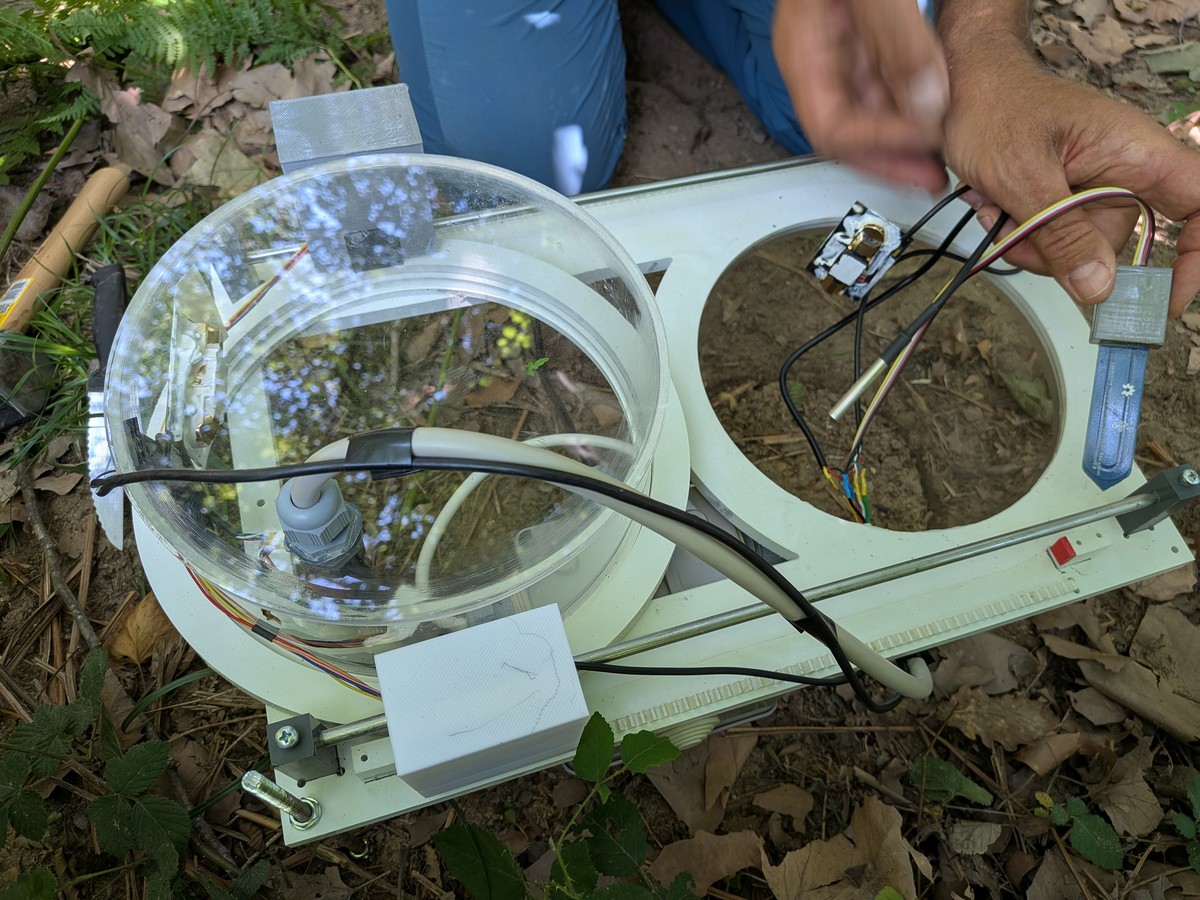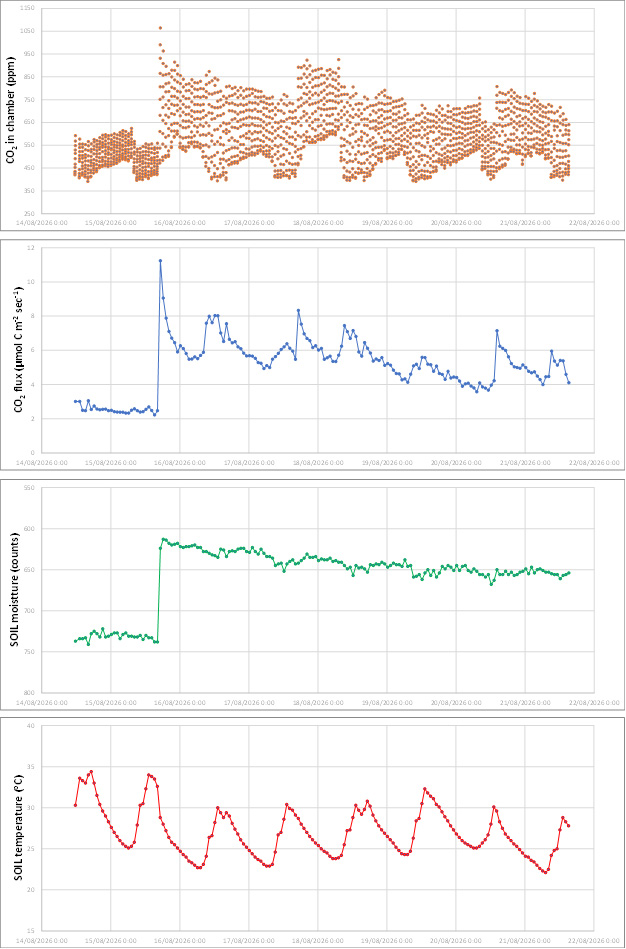
The system combines environmental sensors, automated flux chambers, local data processing, long-range wireless communication and autonomous power supply. Its modular architecture is designed to support long-term environmental monitoring while remaining flexible enough to be adapted to different sites and measurement requirements.
A sensing node for terrestrial and aquatic environments
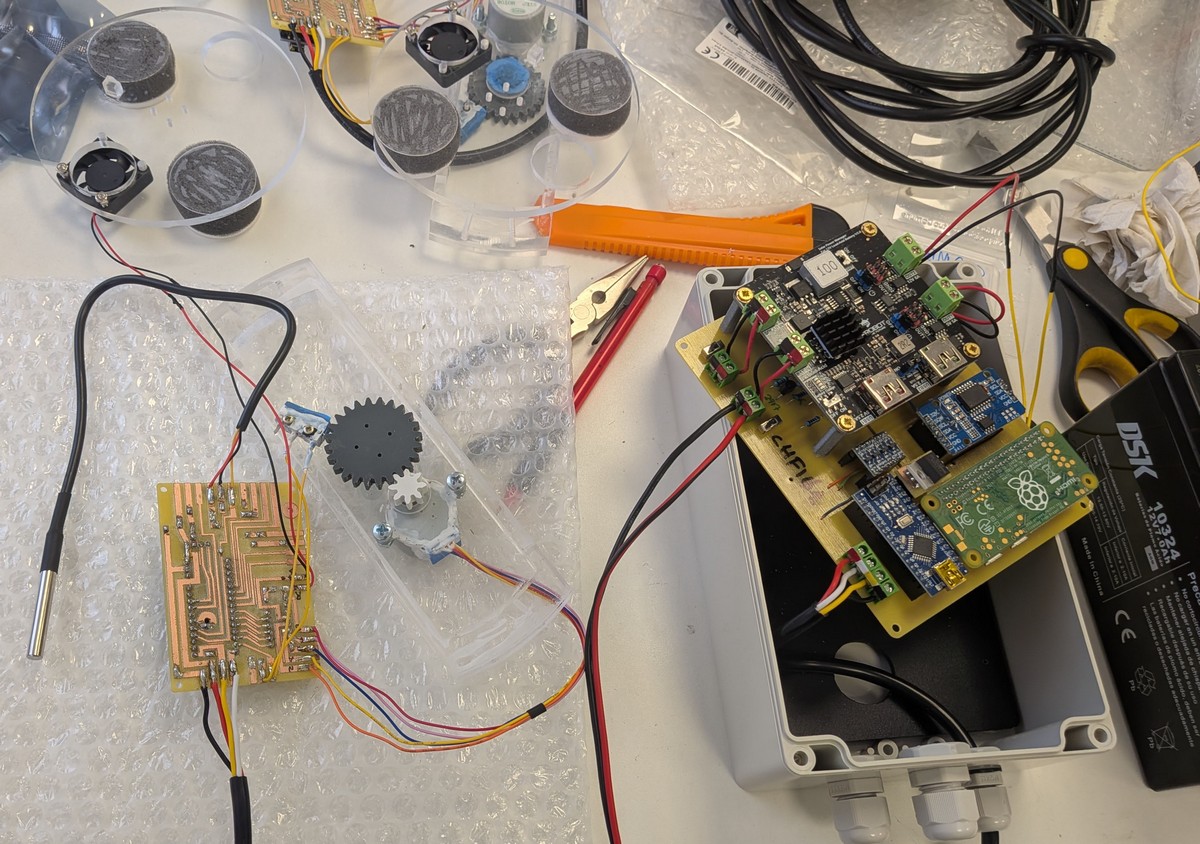
At the core of the system is a sensing node based on either an STM32 NUCLEO-L476RG microcontroller or a Raspberry Pi Zero W–Arduino configuration. The node collects and processes information from several sensors measuring atmospheric, soil and water conditions.
The current sensor configuration includes Telaire T6615 NDIR sensors for CO₂, BME280 modules for air temperature, relative humidity and atmospheric pressure, DS18B20 thermistors for soil and water temperature, and capacitive sensors for soil moisture.
Particular attention was given to CO₂ measurement, which is central to the operation of the flux chambers. The Telaire T6615 uses non-dispersive infrared (NDIR) technology and a dual-channel measurement/reference configuration, providing automatic calibration capabilities and improved stability for long-term measurements.
The sensing node does more than collect environmental data. It also controls the mechanical components required to operate the automated measurement chambers. Fans provide ventilation, while stepper motors control chamber movement. The electronics therefore integrate environmental sensing and automated chamber operation within a single system.
Connecting remote measurements through LoRa
Collecting measurements in remote locations is only part of the challenge: the data also need to be stored, transmitted and remotely supervised. For this reason, the prototype incorporates a long-range LoRa wireless communication link.
The communication system consists of three main stages. First, the sensing node acquires and processes the environmental measurements. These are transferred to an intermediate communication node, which stores a local copy on a microSD card, manages the operating mode of the system and transmits the information through LoRa. Finally, a remote node based on a Raspberry Pi receives the information and provides data visualisation, remote supervision and connectivity to cloud-based storage through Wi-Fi or Ethernet.
The LoRa connection uses Seeed Studio LoRa-E5 Mini modules, providing a compact and low-power solution for long-range communication.
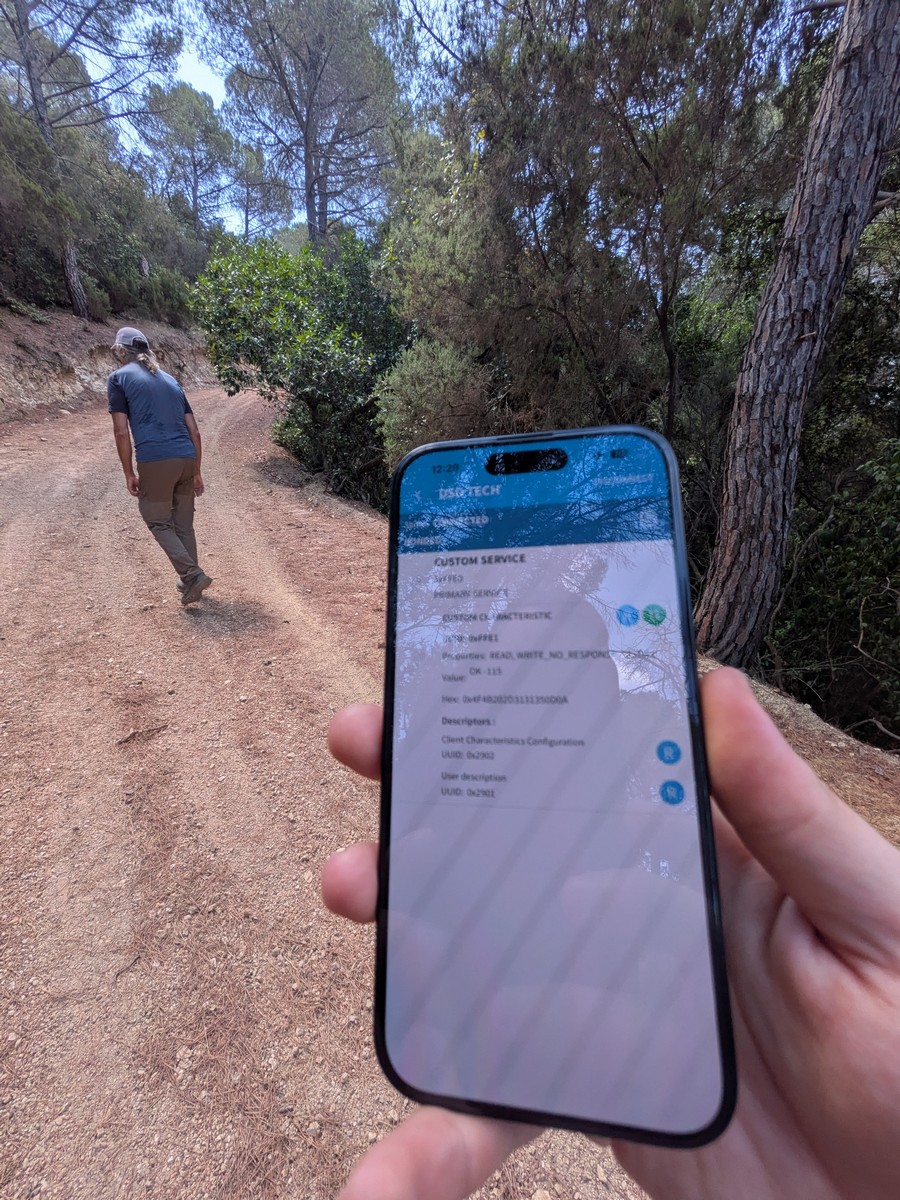
Importantly, communication is bidirectional. The system not only transmits measurements from the field but can also receive instructions remotely. Different operating modes, including normal operation, debugging and testing, can be selected locally or through the LoRa link. This makes it possible to supervise and reconfigure the sensing system without having to access the measurement site directly.
Designed to operate autonomously
Autonomy is essential for environmental monitoring at remote sites. The first two stages of the system have an estimated continuous power consumption of approximately 6–7 W. The current power configuration combines a 12 V, 12 Ah AGM battery, providing approximately 24 hours of autonomy, with a 20–30 W solar panel and charge regulator.
This configuration is intended to support continuous operation without dependence on fixed electrical infrastructure. Further development will focus on optimising energy consumption, component costs and mechanical operation.
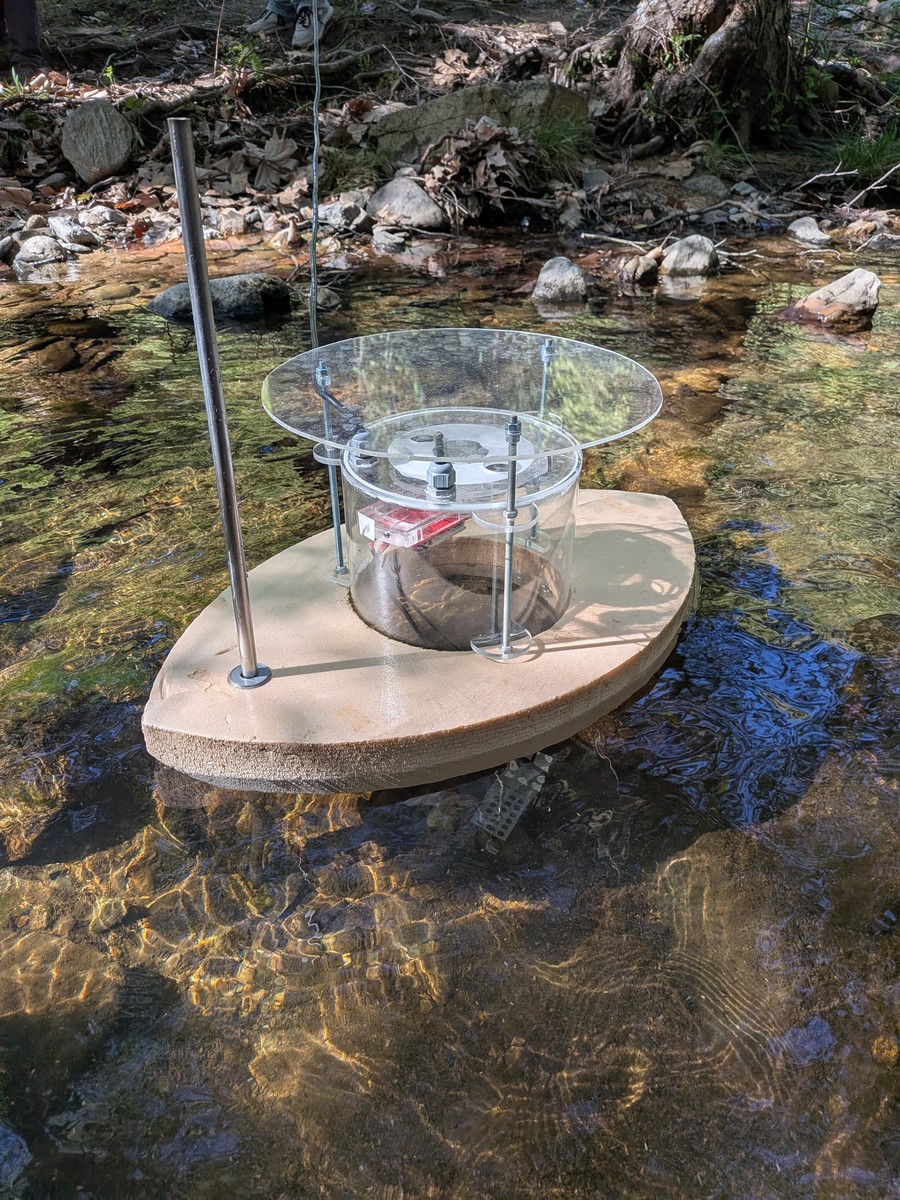
Putting the prototype to the test
Following development and integration, the complete system moved from the laboratory into the field.
Laboratory tests were first conducted to verify the integration and operation of the sensors, data-acquisition electronics, actuators and communication modules, and to assess measurement consistency and stability under controlled conditions.
The system was subsequently deployed at Fuirosos, in the Montnegre coastal range, and at Contraix and Barranc d’Orris in the Pyrenees. These sites provided real-world conditions in which to evaluate the flux chambers and sensing nodes, LoRa communication and autonomous operation.
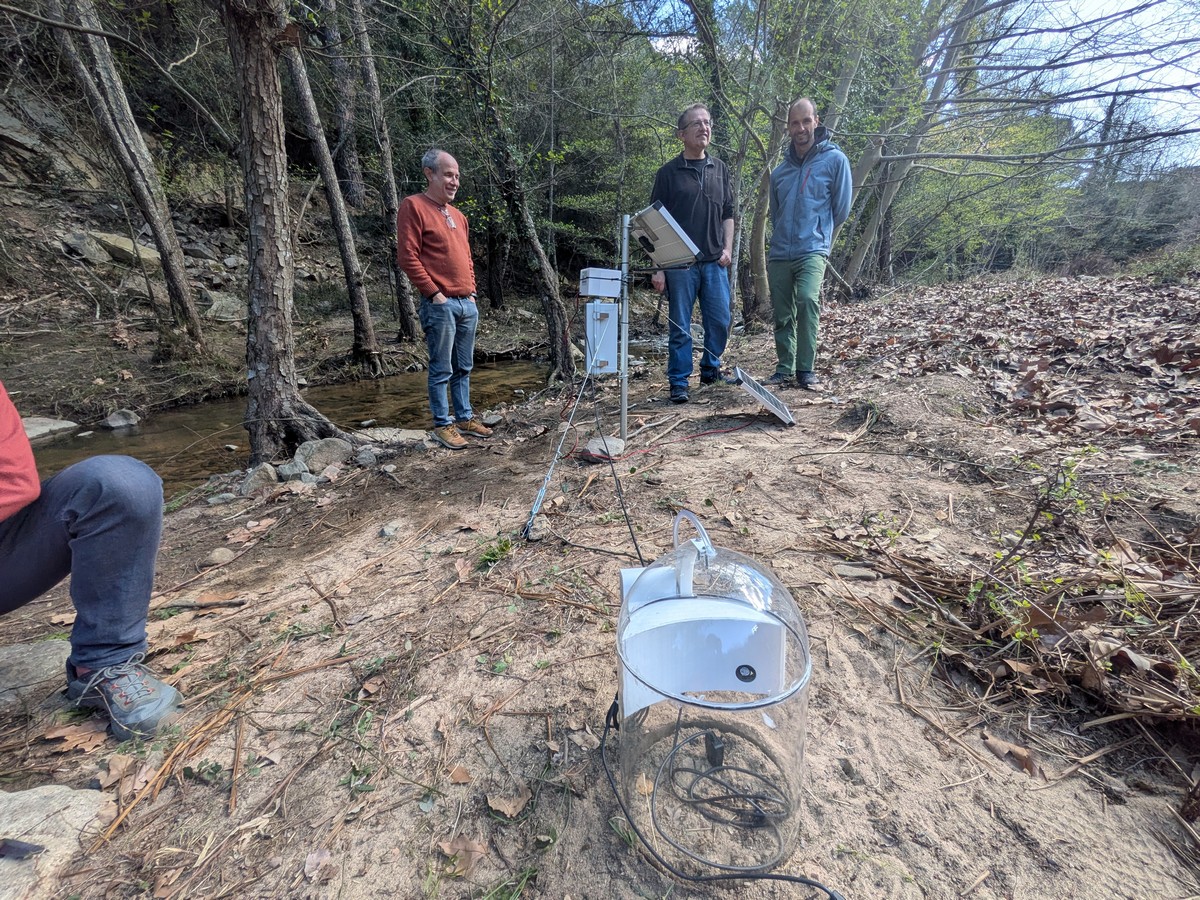
Field testing allowed the entire measurement chain—from environmental sensing and chamber operation to data storage and remote transmission—to be evaluated under actual deployment conditions. It also helped identify and address issues related to sensor performance, communication reliability, power supply and overall system integration.
These tests represent an important step towards the use of the technology in longer-term environmental monitoring campaigns. The experience gained in the field will now guide further improvements to the prototypes, with the ultimate aim of providing a cost-effective, autonomous and adaptable platform for high-resolution monitoring of GHG fluxes in headwater catchments.