How do climate change, atmospheric nutrient deposition and land use affect the capacity of headwaters to regulate greenhouse gases?

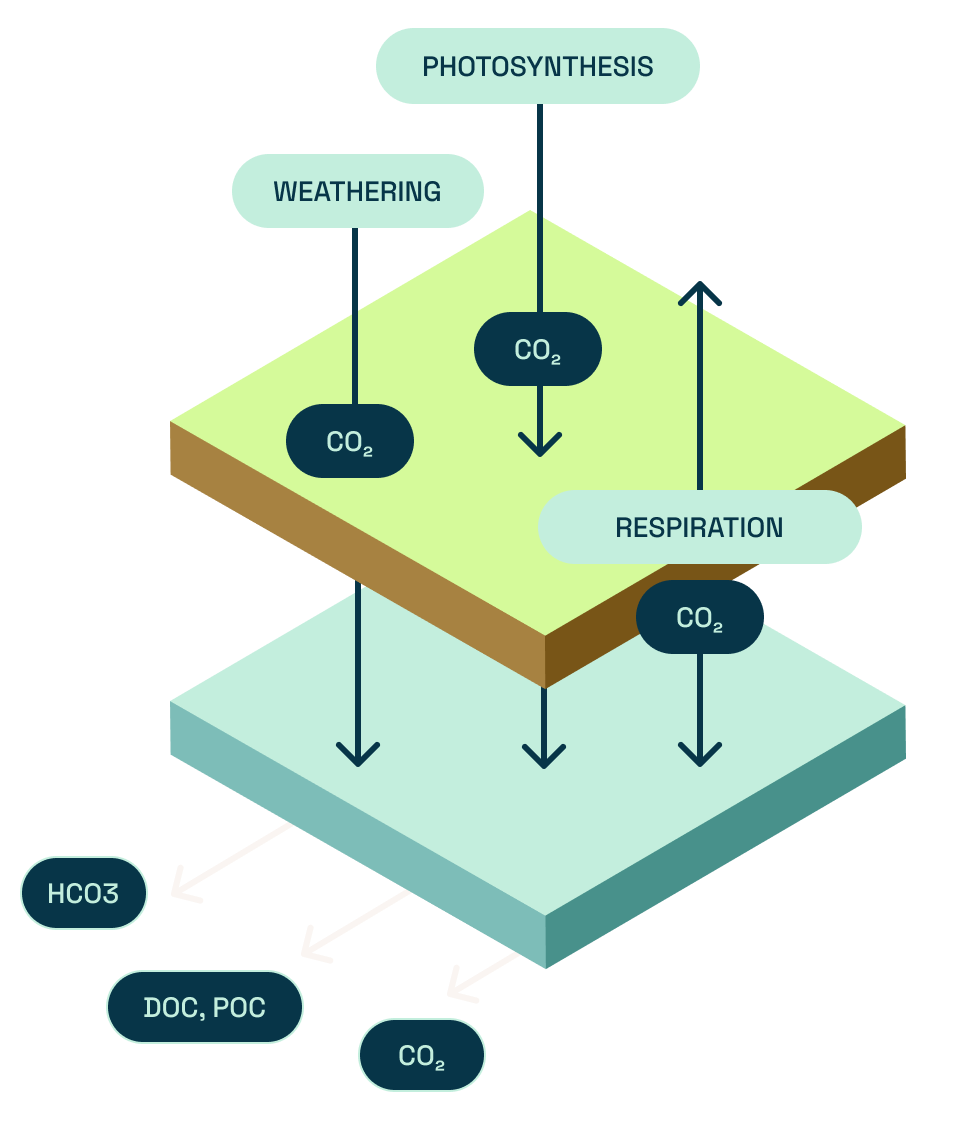
The SERVICO2 project studies a little-known but fundamental ecosystem service: the ability of headwater catchmentsf to act as sinks or sources of greenhouse gases such as CO₂, CH₄ or N₂O. Understanding how these fluxes vary in a context of global change is key to preserving the services that nature provides us and to developing effective management strategies.

An international project

SERVICO2 is a project within the Water4All 2023 Joint Transnational Call, with participation of research institutions from Spain, Italy, Czech Republic, Sweden and Finland.

Headwater ecosystems are sentinels of global change. Understanding how they respond helps us protect them… and protect ourselves.

Collaborating institutions

Funding agencies

In Focus

Discover the project in depth.

SERVICO2 Takes Off: Kick-off Meeting at CEAB-CSIC, Blanes

The SERVICO2 consortium gathered for a two-day, face-to-face kick-off meeting in Blanes, hosted at the Centre for Advanced Studies of Blanes (CEAB-CSIC). Participants from CEAB-CSIC, the Polytechnic University of Catalonia (UPC), the University of Padova (UniPd), the Czech Geological Survey (CGS), Umeå University (UMU), and the University of Eastern Finland (UEF) met to discuss the next steps of the three-year project and to refine key aspects of its implementation.

Smart Chambers and Sensor Networks: Monitoring GHG Fluxes with DIY Innovation

To measure greenhouse gas (GHG) exchange in real-time and at high resolution, Work Package 3 (WP3) is developing low-cost, multi-sensor chambers designed for long-term, autonomous deployment in the field. These portable devices—built using open-hardware principles—will integrate sensors for CO₂, CH₄, N₂O, NOx, VOCs, and environmental variables, operating as modular "electronic noses." With robust microcontroller programming and remote data connectivity, the system aims to reach TRL 5–7, enabling reliable field validation and paving the way for scalable ecological monitoring technologies.

The Bio-Physical Environment: High-Resolution Monitoring of Carbon and GHG Fluxes

Headwater catchments are composed of distinct landscape units—grasslands, shrublands, forests, soils, and water bodies—each playing a unique role in carbon and greenhouse gas (GHG) dynamics. This article outlines how variations in vegetation, altitude, and land use shape these systems and how climate and nutrient deposition act as key drivers of change. In Work Package 4, we deploy novel sensors to monitor carbon and GHG fluxes across a full seasonal cycle. These high-frequency measurements help us track both steady processes and abrupt climate events, improving our understanding of ecosystem responses in a changing world.

A project supported by the Water4Al Consortium. For more information about the project, you can contact us at:

servico2@ceab.csic.es

© SERVICO₂ | All rights reserved, 2026